
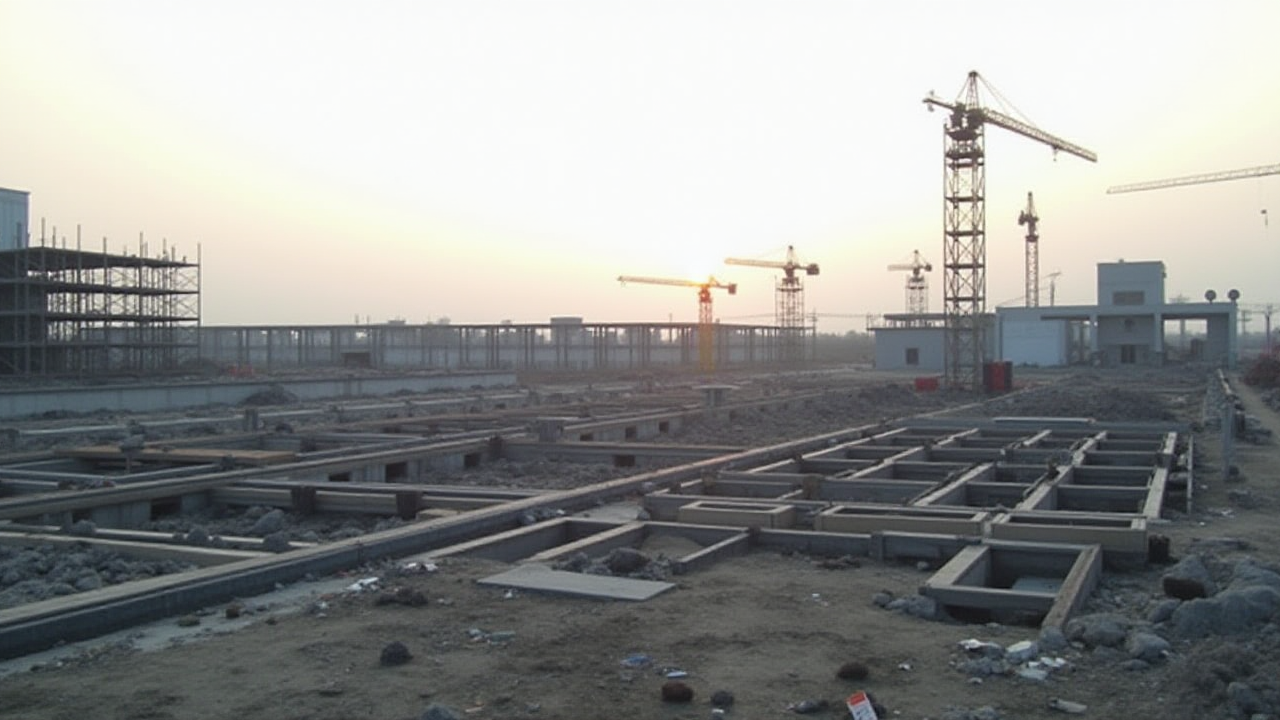
Christopher Chico's September 25, 2026 Battery Chronicle analysis opens with a line that has quietly become the most important sentence for anyone underwriting a battery startup: "The most dangerous thing a battery founder can do is announce a factory." Chico's piece walks through the bankruptcies of iM3NY, Ambri, and Nilar to make the case that Western battery companies keep committing to massive production capacity before proving their processes can deliver reliably at any scale. The list of companies that fit the pattern is now long enough to constitute a category. The counter-example is quieter but structurally different, and it is what modular battery recycling has been quietly demonstrating through 2026 while the announced-factory casualties have been filing Chapter 11. This piece unpacks the pattern Chico documents, what it has in common with the recycling-industry failures the sector has been tracking separately, and why modular battery recycling as an operational model inverts the specific risk profile that keeps taking these companies down.
The Pattern the Battery Chronicle Just Documented
Chico's three primary case studies are worth summarizing before extending the pattern into adjacent segments.
iM3NY committed in August 2022 to a battery factory in Endicott, New York, with a stated target of 1 GWh annual capacity by end of 2023 and 38 GWh by 2030. The Australian Securities and Investments Commission subsequently alleged that iM3NY produced only 46 cells in the first two weeks of January 2023, that assembly remained largely manual, and that by April the facility had produced no saleable cells with 95 percent of output going to scrap. The company filed for Chapter 11 in January 2025 having raised over $70 million in equity and over $100 million in debt, and having remained pre-revenue throughout.
Ambri announced a 140,000 square foot facility in Milford, Massachusetts in June 2022, targeting 200,000 liquid-metal grid batteries per year by 2024. The construction budget depended on a funding round that did not close when the lead investor withdrew. A subsequent effort to raise $50 million from existing investors resulted in commitments of roughly $42 million, which was insufficient to complete the facility. Ambri filed Chapter 11 in May 2024 with over $18 million already spent on the Milford fit-out, no revenue, and no demonstrated ability to manufacture at scale.
Nilar, a Swedish nickel-metal-hydride battery manufacturer, spent 2021 through 2023 selling batteries for less than they cost to produce while working to resolve stability problems in earlier product generations. A promised improved battery scheduled for early 2024 production never reached commercial output. The company filed for bankruptcy in November 2023.
Chico closes his analysis by extending the list to include Northvolt, Morrow, 24M Technologies, Li-Cycle, Natron Energy, and Ascend Elements. The recycling-industry entries on that extended list are the ones most directly relevant to the modular battery recycling conversation, and they deserve individual attention.
The Recycling-Industry Version of the Same Failure Mode
Ascend Elements filed Chapter 11 in the US Bankruptcy Court for the Southern District of Texas on April 9, 2026 after raising more than $1.1 billion across the previous decade. The Georgia facility was already producing 99 percent-plus pure lithium carbonate at commercial scale. The Kentucky facility was under construction for 1,250 tonnes per month of pCAM production. Chief Executive Linh Austin described the financial position as insurmountable and cited the cancellation of a $316 million Department of Energy grant tied to the Kentucky facility as a triggering factor. The company had real downstream technology and real government backing. It could not close the gap between construction ramp and revenue fast enough to survive.
Li-Cycle entered creditor protection across Canada and the United States in May 2025 despite securing a $475 million Department of Energy loan commitment it was unable to draw. The failure mode was specifically the downstream Hub in Rochester, which was designed to convert black mass into battery-grade lithium carbonate at scale. Cost overruns at the Hub, not the upstream Spoke shredding operations, drove the bankruptcy. The finished-material thesis that Li-Cycle was pursuing was not the problem. The single-site downstream megaproject as the pathway to reach it was. The July 20, 2026 Beyond Black Mass analysis examined how the downstream thesis holds independently of the megaproject strategy that took down Ascend and Li-Cycle, and how modular battery recycling is the operational answer that avoids the specific capex ramp that broke both companies.
The pattern that connects iM3NY to Ambri to Nilar to Ascend Elements to Li-Cycle is not that any of these companies had bad technology or unqualified teams. Ascend produced 99 percent-plus lithium carbonate. Li-Cycle secured hundreds of millions in DOE support. iM3NY, Ambri, and Nilar all had real product concepts. The pattern is that all of them committed to a scale of construction that required uninterrupted funding through a multi-year build cycle, and none of them survived when policy or commodity prices moved against the timeline mid-construction. The failure was not the destination. It was the choice of how to get there.
The Common Failure Mode Beneath the Factory Announcements
Megaproject economics require a specific set of external conditions to hold constant across a two-to-five-year construction window. Feedstock volumes have to arrive on projected schedules. Capital markets have to stay open for follow-on rounds. Government grants and loans have to remain funded. End-market prices for the finished output have to hold up long enough to service the debt taken on to build. When any one of these conditions moves against the project mid-construction, the operator faces a binary choice between securing emergency capital to complete the build or writing off the sunk cost.
Neither option is good. Emergency capital typically arrives at terms that dilute existing shareholders severely or introduce senior debt that constrains post-completion operations. Writing off the sunk cost means the entire strategic bet has failed before the business has generated a dollar of revenue. Both outcomes are what the last five years of battery-sector bankruptcies have looked like.
The alternative business model for reaching commercial-scale battery-grade output is modular battery recycling, which inverts the megaproject risk profile at every axis. Instead of one billion-dollar site that must be built to completion before revenue arrives, modular operations deploy commercial-scale production units that generate finished product from day one of operation. Instead of one integrated construction bet that has to succeed as a whole, modular deployment adds capacity one line at a time, matched to feedstock supply and offtake commitments. Instead of exposure to one billion dollars of capex, exposure is exposure to one line of capex, with the ability to pause, rescale, or add units as market conditions justify.
How Modular Battery Recycling Inverts the Megaproject Risk Profile
The specific mechanism by which modular battery recycling avoids the announce-a-factory trap sits in the timing relationship between capital deployment and revenue generation. In a megaproject, capital is deployed across the entire build cycle before any of it generates commercial output. The operator carries construction risk, ramp risk, and market risk simultaneously across a multi-year window, and any single one of those risks materializing at the wrong point in the cycle can end the business.
In a modular deployment, capital is deployed in units that individually reach revenue in a matter of months rather than years. Each unit's commercial performance is validated before the next unit is deployed. Construction risk on any single unit is small, ramp risk is bounded by the throughput of one line rather than an entire facility, and market risk exposure is proportional to the operational base rather than to the total planned capacity. Feedstock supply and offtake commitments guide the deployment schedule rather than being assumed to materialize on the megaproject's timeline.
The operational geometry also fits the actual shape of the recycling feedstock problem. Battery scrap does not arrive in one place. It arrives at OEM factories, cell manufacturing facilities, salvage yards, and second-life integrators scattered across the continent. Modular lines can be deployed adjacent to feedstock generation rather than requiring feedstock to be trucked or shipped to a central site. That is a structurally different logistics profile than the Rochester or Kentucky model.
The result is not slower revenue growth. It is faster revenue growth, because the first line generates cash while the second is being commissioned, which funds the third, and so on. The accumulated capacity at year five is not smaller than what a megaproject would have targeted. It is just built on demonstrated production reliability that was proven before each incremental capital deployment, rather than being contingent on it.
The Commercial Evidence for the Modular Model
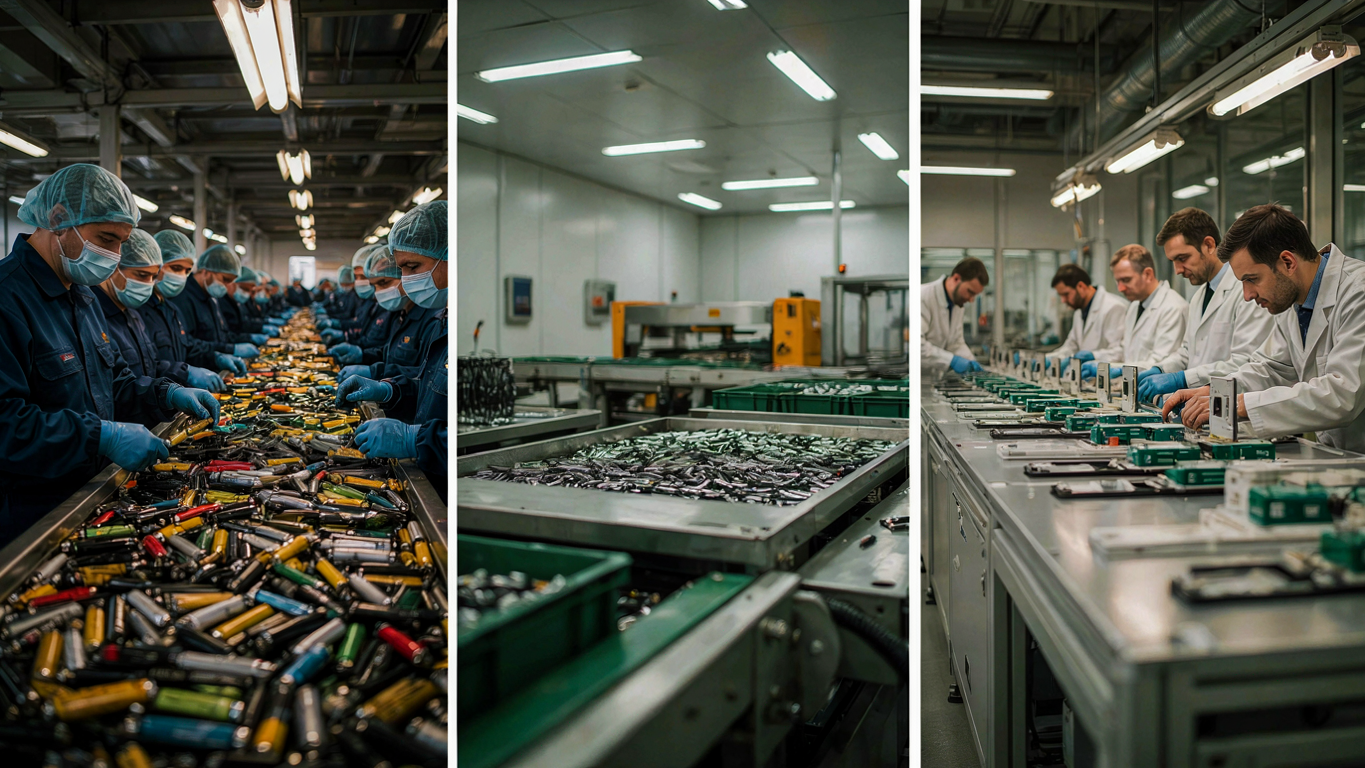
Green Li-ion's GREEN HYDROREJUVENATION™ technology at Atoka, Oklahoma is one of the operational examples of the modular battery recycling model working in commercial practice. The facility runs on processing lines rated at 730 metric tonnes per year each, each of which converts unsorted black mass directly into 99 percent pure precursor cathode active material, battery-grade lithium carbonate, and recovered graphite. Each line is commercially operational the day it comes online. Adding capacity means deploying another line, not restarting a permitting or construction cycle.
The commercial validation for the model shows up in the same categories that Chico's failed case studies could not demonstrate. Atoka is operational and producing battery-grade output today. The facility operates under a binding offtake agreement with commodity trader WMC through 2030. NCM hydroxide produced from American-recycled raw materials has been listed on the Metalshub platform for direct commercial sale, validating market pricing on finished output rather than promised output. The company operates lines with a presence across the United States, Singapore, Korea, Germany, and Australia, providing OEMs coordinating recycled supply across their global manufacturing footprint with a partner whose commercial performance is demonstrable rather than aspirational.
The contrast with the announce-a-factory bankruptcies is not that Green Li-ion is a better company than iM3NY or Ambri or Nilar or Ascend or Li-Cycle. Every one of those companies had smart people, real technology, and real capital. The contrast is that modular battery recycling as a deployment strategy does not require any of the external conditions that took those companies down to hold constant across a construction window that the operator cannot control. Revenue does not depend on completing a billion-dollar site. It depends on running the first line well, then the second, then the third.
Why This Matters for OEM Procurement and Investor Decisions
For OEMs, cell manufacturers, and industrial buyers evaluating recycling supplier relationships, the Chico analysis and the extended pattern of recycling-industry casualties should update the way supplier due diligence gets structured. The question of whether a recycling partner will still exist to fulfill a five-year offtake commitment matters at least as much as unit price. Suppliers whose delivery model depends on completing a downstream megaproject before generating revenue carry a specific category of counterparty risk that modular battery recycling operators do not carry.
For investors evaluating new capital allocation into the battery recycling space, the same logic applies with even more force. Every dollar deployed into a megaproject-model recycler is a dollar exposed to the specific failure mode that has now taken down Ascend Elements, Li-Cycle, and the parallel primary-manufacturing casualties that Chico documents. Every dollar deployed into a modular battery recycling operator is deployed into a business model that generates revenue from the first unit, validates commercial performance before scaling, and reduces exposure to any single external variable that might move against the timeline.
Procurement teams and investors ready to evaluate modular recycling capacity can begin partnership conversations with qualified operators such as Green Li-ion, whose Atoka facility is the operational proof point that the model works at commercial scale and whose global line deployments extend the same architecture across the manufacturing regions the industry needs coverage in.
The Honest Summary
Chico's Battery Chronicle piece is worth reading in full for the specific detail on iM3NY, Ambri, and Nilar, and for the closing observation about what actually distinguishes surviving battery companies from the ones filing Chapter 11. The observation, paraphrased, is that survival depends on the ability to manufacture reliably, deliver to real customers, and earn revenue from real sales, rather than on the ability to announce production capacity that has not yet been demonstrated.
The extension of that observation into the recycling sector is where modular battery recycling becomes the operational answer to the announce-a-factory trap. Ascend Elements had real downstream technology. Li-Cycle had real Department of Energy backing. Neither survived the specific risk profile of a single billion-dollar downstream site that had to reach construction completion before revenue arrived. Green Li-ion's GREEN HYDROREJUVENATION™ technology at Atoka demonstrates the alternative. Modular lines. Revenue from day one of each unit. Capacity growth matched to feedstock supply and offtake commitments rather than committed in advance of them.
The industry keeps learning this lesson the hard way. The recyclers still standing in the second half of 2026 are the ones who learned it early enough to build the business model around it.


.svg)