

On July 15, 2026, the Office of Strategic Capital inside the U.S. Department of War announced the National Security Fund Finance (NSFF) program, a new capital vehicle that expands critical minerals recycling funding by pairing federal loans with private investment funds targeting critical minerals and materials. The program is authorized under the One Big Beautiful Bill Act and represents another step in a wider federal shift toward treating domestic material recovery as a national security priority. For battery recyclers, black mass processors, and procurement teams, the NSFF announcement matters because critical minerals recycling funding is now flowing through a new fund-of-funds pathway targeting companies operating inside the United States.
The Notice of Funding Opportunity has not yet been published, and specific eligibility criteria for fund managers and portfolio companies will be released on the Office of Strategic Capital's website when the program opens applications. What is already clear is the strategic direction. Battery recycling sits inside a widening federal definition of critical minerals sourcing, and NSFF is one of several instruments now converging on that definition. Critical minerals recycling funding, once distributed almost entirely through grant channels, is increasingly moving through private capital vehicles that discipline diligence, deal flow, and follow-on financing.
What the NSFF Program Actually Does
The Office of Strategic Capital, or OSC, was established inside the Department of Defense in December 2022 and is now housed inside the renamed Department of War. Its statutory mission is to attract and scale private capital into supply chain technologies critical to national security. OSC's existing tools include direct equipment finance loans of up to $150 million per project and the Small Business Investment Company Critical Technology Initiative, a joint program with the Small Business Administration that provides fund-level leverage of up to $175 million per participating fund.
NSFF extends the fund-of-funds model further into the critical minerals space. According to the announcement, NSFF will issue loans to qualified investment fund managers, who will then combine those loans with private capital to invest in portfolio companies addressing U.S. national security shortages related to critical minerals and materials. The One Big Beautiful Bill Act, signed into law on July 4, 2025, directed $500 million to the Department of Defense Credit Program Account under OSC. Per the Congressional Research Service overview of OSC, the FY2026 appropriation of $97.8 million to the DOD Credit Program account is expected to subsidize up to $4.4 billion in loans, loan guarantees, and technical assistance. NSFF adds a new deployment pathway for that capital, targeted at the critical minerals segment specifically, and it expands the surface area for critical minerals recycling funding at the fund-manager level rather than the individual company level.
The mechanism matters. Fund-of-funds structures let federal capital catalyze private diligence, portfolio construction, and follow-on financing that a single direct loan cannot. Investment fund managers screen deals, negotiate terms, and monitor portfolio companies at a level of granularity Washington cannot match. By financing the fund rather than the company, NSFF widens the aperture of critical minerals recycling funding available across a portfolio of qualifying businesses.
Why Critical Minerals Recycling Funding Fits the NSFF Mission
The connective tissue between NSFF and battery recycling is the federal definition of a critical mineral. Under the Energy Act of 2020, a critical mineral is a non-fuel mineral essential to the economic or national security of the United States with a supply chain vulnerable to disruption. The U.S. Geological Survey published its 2022 list of 50 critical minerals using this definition, and on November 7, 2025 the USGS finalized an updated 2025 list expanded to 60 minerals. Lithium, graphite, cobalt, nickel, and manganese, the core recoverable outputs of lithium-ion battery recycling, are all on the current list. Those are precisely the materials that spent electric vehicle batteries, consumer electronics packs, and grid storage systems contain in commercially meaningful quantities.
This is the point where recycling becomes a domestic critical minerals recycling funding candidate rather than a waste management story. A commercial-scale black mass processor that recovers battery-grade lithium carbonate, anode-grade graphite, and precursor cathode active material (pCAM) is producing federally designated critical minerals from a feedstock that already sits inside U.S. borders. The material never has to be mined, shipped from an overseas supplier, or refined in a jurisdiction subject to export restrictions. For an OSC-backed fund evaluating deals that reduce U.S. supply chain vulnerability, this is a defensible thesis, and critical minerals recycling funding directed at commercial-scale processors is a natural fit.
The Department of Energy has treated recycling this way for years. The DOE's Critical Minerals and Materials program, housed inside the Office of Critical Minerals and Energy Innovation, explicitly coordinates research, development, and demonstration into strategic resources including recovered battery materials. DOE's Advanced Materials and Manufacturing Technologies Office has invested in lithium-ion battery recycling and remanufacturing programs through the ReCell Center at Argonne National Laboratory, framing recycling as a strategy to address challenges in the critical materials supply chain. NSFF now extends that logic into the private capital markets, where diligence discipline and deal flow work at a scale grant programs cannot reach on their own. Procurement teams tracking U.S. battery recycling and supply chain resilience should read NSFF as confirmation, not deviation. The direction of federal critical minerals recycling funding is unmistakable.
Where Battery Recycling Sits in the Federal Critical Minerals Toolkit
NSFF joins a crowded but coordinated field. The Development Finance Corporation, the Export-Import Bank, the Department of Energy Loan Programs Office (now branded Energy Dominance Financing), and Defense Production Act Title III authorities are all deploying capital into critical minerals projects. The One Big Beautiful Bill Act itself appropriated a $2 billion increase to the National Defense Stockpile, $5 billion to the Industrial Base Fund available through September 2029, $500 million to OSC's credit program, and $1 billion for Defense Production Act financing through 2027. That is roughly $8.5 billion in fresh critical minerals recycling funding capacity plus adjacent mining and processing capital available across federal instruments.
Battery recycling has a distinct position in this landscape. Recycling is faster to deploy than a greenfield mine, produces materials with a smaller environmental footprint, and can be scaled inside existing industrial parks rather than at remote extraction sites. Those characteristics are exactly what makes critical minerals recycling funding attractive to fund managers underwriting time-to-first-output risk. Peer-reviewed research published in ACS Sustainable Resource Management notes that recycling lithium-ion batteries offers a route to recover valuable materials from spent batteries while reducing reliance on virgin mining. The same review documented that DOE announced $4.82 billion across 39 projects to strengthen domestic production of advanced batteries and battery materials under the Bipartisan Infrastructure Law, including Round 1 grants supporting commercial-scale facilities to produce lithium and graphite. NSFF is the private-capital-catalyst cousin of those grants, and it is likely to attract fund managers already building critical minerals theses that include recycling exposure. Critical minerals recycling funding routed through fund managers gives limited partners a diversified way to underwrite the sector.
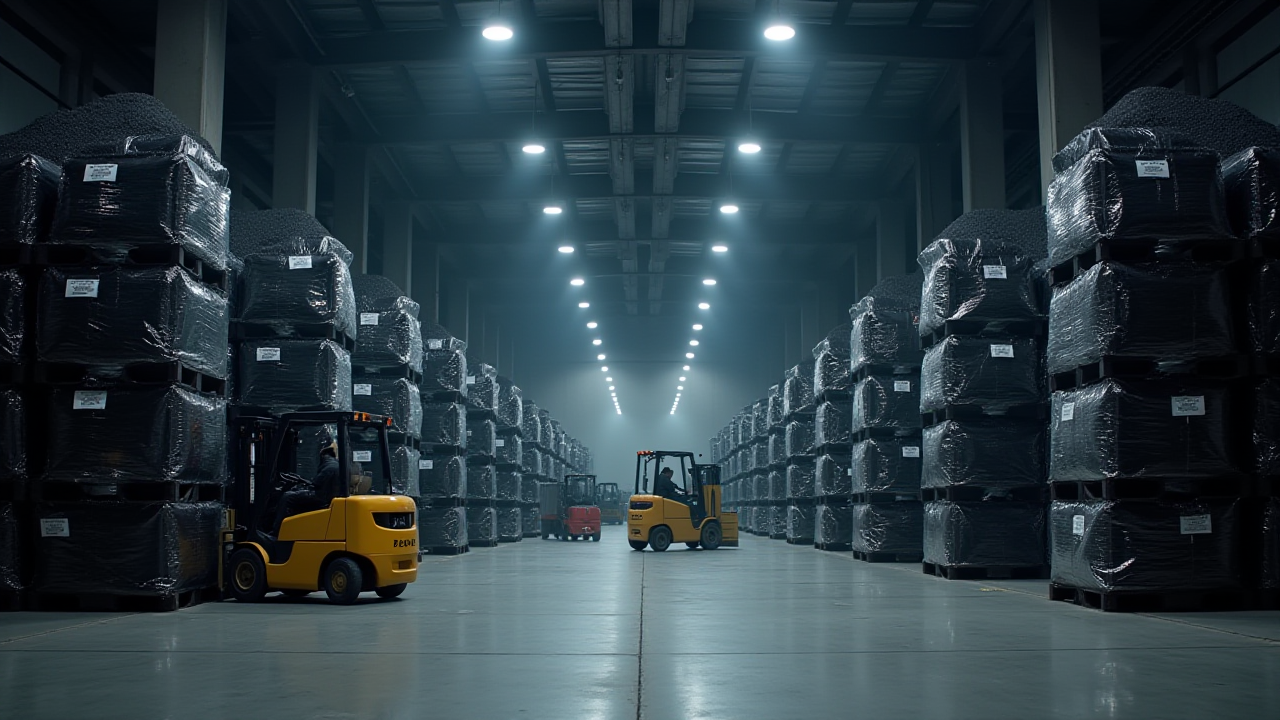
The black mass as a domestic critical minerals source framing that recyclers have used for years now matches the language used by OSC. Where the industry once described black mass as feedstock, the federal capital markets increasingly describe it as a supply chain asset. That vocabulary alignment matters when investment fund managers pitch limited partners, when portfolio companies structure loan applications, and when procurement teams justify buying recycled material at parity with virgin. Critical minerals recycling funding is now a defensible line item in institutional portfolios, not an exotic thesis to be discounted.
What Procurement Teams and Investors Should Watch
The immediate action item is straightforward. Fund managers interested in NSFF participation should monitor the Office of Strategic Capital's website for the Notice of Funding Opportunity, which the July 15 announcement indicated will be released soon. Portfolio companies that expect to receive investments from NSFF-financed funds should prepare diligence materials that address critical minerals eligibility, U.S. operational footprint, feedstock traceability, and output specifications relevant to defense and industrial base customers. The bar for critical minerals recycling funding at the fund level is likely to include commercial-scale operation, U.S.-based processing, and product outputs traceable to the USGS critical minerals list.
For procurement teams evaluating recycled critical minerals as supply, the diligence questions have shifted with the federal landscape. Volume, product quality, and processing methodology now sit alongside supply chain provenance, national security alignment, eligibility under federal preference programs, and whether a supplier is likely to be a beneficiary of critical minerals recycling funding downstream. Modular hydrometallurgical processing lines that convert unsorted black mass directly into battery-grade lithium carbonate, recovered graphite, and pCAM are a strong technical fit for the NSFF thesis because they produce named critical minerals at commercial scale inside the United States without dependence on foreign refining steps. A single GREEN HYDROREJUVENATION™ line, for example, produces up to 730 metric tons of recovered material per year, and multiple modules can be stacked at a single site to match demand. This is the operational profile critical minerals recycling funding is designed to reward.
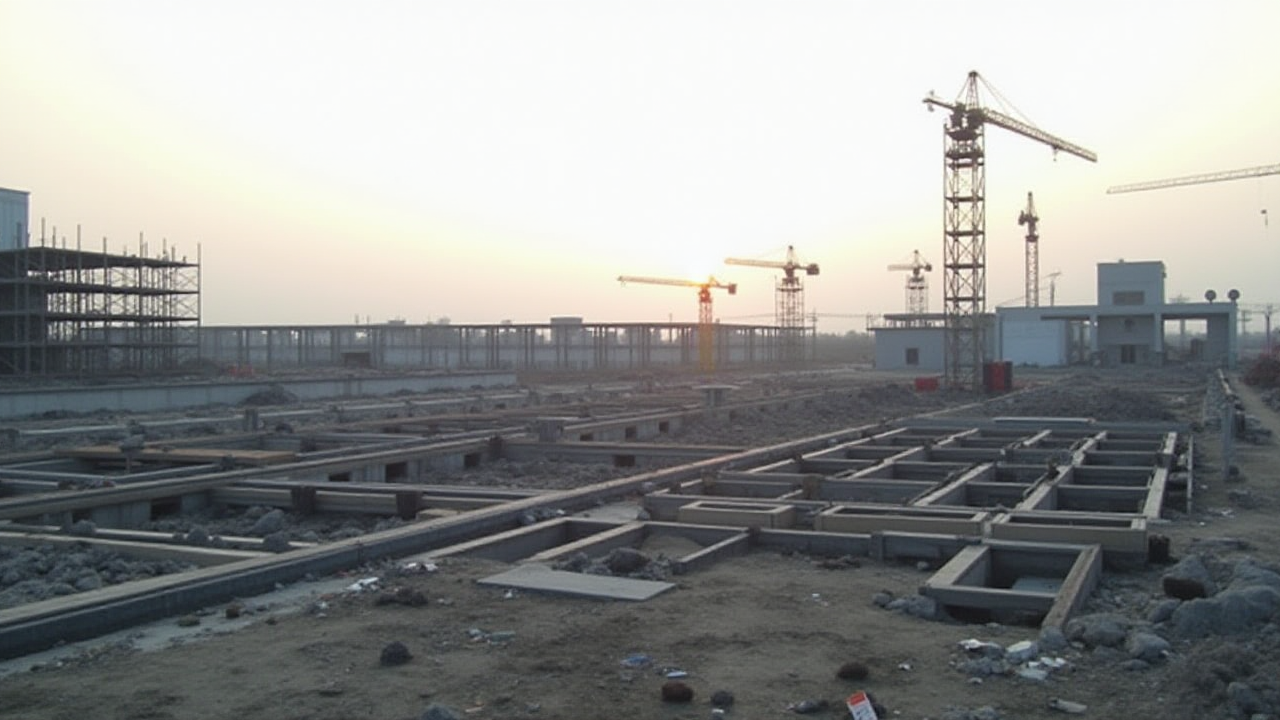
The commercial-scale domestic black mass processing plant in Atoka, Oklahoma is one operating example of what an NSFF-eligible portfolio company profile can look like. It processes unsorted black mass into battery-grade output using patented hydrometallurgy, keeps material inside U.S. jurisdiction, and produces federally designated critical minerals at scale. Procurement teams ready to evaluate domestic recycled critical minerals supply can begin partnership conversations with qualified recyclers such as Green Li-ion, whose modular commercial lines were designed for the kind of domestic material recovery mission that NSFF and adjacent federal programs are now capitalizing.
Broader supply chain events reinforce the case. The February 2026 Zimbabwe lithium export ban that affected roughly 10 percent of global lithium supply, and the Defense Logistics Agency's July 2026 lithium carbonate solicitation, both signal that lithium is now treated as a strategic material rather than a commodity. Recycling is one of the few supply chain pathways immune to resource nationalism and recycled lithium disruption because the feedstock is already inside U.S. borders. NSFF creates a mechanism to move private capital toward that structural insulation, and critical minerals recycling funding at the fund level accelerates the flow.
The honest summary
NSFF does not solve the U.S. critical minerals supply chain problem on its own. The program is one loan-and-fund vehicle inside a much larger federal architecture that includes DOE grants, DPA Title III authorities, DFC and EXIM debt, and equity positions the federal government is now taking directly in select mining and processing firms. What NSFF does is signal that critical minerals recycling funding will increasingly flow through private investment fund managers rather than agency-to-company grant channels alone. That shift favors recyclers with commercial-scale operations, defensible unit economics, and product specifications that match the needs of battery, defense, and industrial base customers.
For companies producing recovered lithium, graphite, cobalt, nickel, and pCAM inside the United States, the practical result is a wider pool of critical minerals recycling funding sources to approach and a more sophisticated diligence conversation to prepare for. For procurement teams, it means recycled material is arriving in the market with federal capital and federal policy behind it, and the buy-side case for including recyclers in qualified supplier lists is stronger than it was a year ago. NSFF is a directional confirmation of a market shift already underway, and the companies best positioned to benefit are those that have already built out domestic supply chain battery recycling capacity and can prove it at commercial scale. Critical minerals recycling funding is not a lottery ticket. It is a market signal, and the recyclers who read it clearly will be in the room when the money moves.

.svg)