
The U.S. Defense LogisticsAgency's July 2026 solicitation for up to 16,167 metric tons of battery-gradelithium carbonate under a five-year fixed-price contract, with a $300 millionceiling, marked a decisive turn in federal materials policy. It also crystallizedthe case for domestic supply chain battery recycling. When the Pentagon buyslithium carbonate directly for the National Defense Stockpile, it is signalingthat lithium is now a strategic asset, not just a commercial commodity, andthat the shortest, most resilient path to secure supply runs through recyclers,refiners, and processors operating on American soil.
For decades, U.S. batterymaterial sourcing depended on a fragile arc from South American brines andAustralian spodumene through Asian refining and back to North American cellplants. That path works when trade lanes are calm. It strains under export controls,single-region processing disruptions, or shipping bottlenecks that arrive withlittle warning. Localized recycling changes the equation. By keeping black massonshore and converting it to battery-grade materials inside the United States,localized recycling shortens the loop and reduces the exposure that made theDLA tender necessary in the first place.
The DLA Lithium Carbonate Tender: A Signal, Not a Spike
The tender itself isinstructive. According to reportingfrom Shanghai Metals Market, the solicitation specifies battery-gradelithium carbonate at 99.5 percent minimum purity, with phased deliveries acrosswarehouses in New York, Nevada, Indiana, and Ohio. The five-year, fixed-pricestructure removes short-term price signaling from the equation entirely. It isa strategic stockpile purchase, not an inventory management exercise, and itreinforces a shift from policy planning to implementation.
This is not an isolated action.As Mining.comreported in March 2026, the DLA issued parallel Requests for Informationcovering lithium, nickel, tin, chromium, and tellurium, signaling stockpileexpansion across multiple critical minerals simultaneously. The pattern isdeliberate: identify materials where U.S. import reliance is highest, then usefederal purchasing power to underwrite domestic and allied production.
The Numbers Behind America's Lithium Exposure
The scale of U.S. importreliance explains the urgency. Per the USGSMineral Commodity Summaries 2026, Chile and Argentina together suppliedroughly 97 percent of U.S. lithium imports during the 2021 to 2024 period, withChile at 54 percent and Argentina at 43 percent. Global lithium consumptionreached an estimated 263,000 tons in 2025, up 20 percent year over year, drivenby continued EV sales growth in China and Europe alongside expanding batteryenergy storage deployment.
Domestic production data iswithheld to protect proprietary information, but the USGS is clear that mostglobal lithium production sits outside the United States, which increasesvulnerability to disruption. The USGSimport reliance dataset underscores how deeply U.S. supply chains are tiedto a small number of foreign producers, not just for lithium but across dozensof commodities essential to defense and industrial manufacturing.
These conditions expose the globalbattery supply chain vulnerabilities that federal policy has been trying toaddress. Lithium carbonate spot prices sat near $9,000 per ton in 2025, a 31percent decline from the prior year, which makes the DLA's decision to lock infixed-price, multi-year supply particularly notable. Stockpile purchasing at amarket low reflects a longer time horizon than commercial buyers typicallyoperate on.
Why Overseas Black Mass Shipping Undermines Domestic Security
Domestic supply chain batteryrecycling is not a slogan. It is a concrete alternative to the current default,which is exporting spent lithium-ion batteries and shredded black mass to Asianprocessors and buying refined materials back later at higher cost. Every ton ofblack mass that leaves the country represents lithium, cobalt, nickel, andgraphite that could have been reprocessed here into battery-grade cathodeprecursor. It also represents jobs, tax base, and processing know-how thataccrue somewhere else.
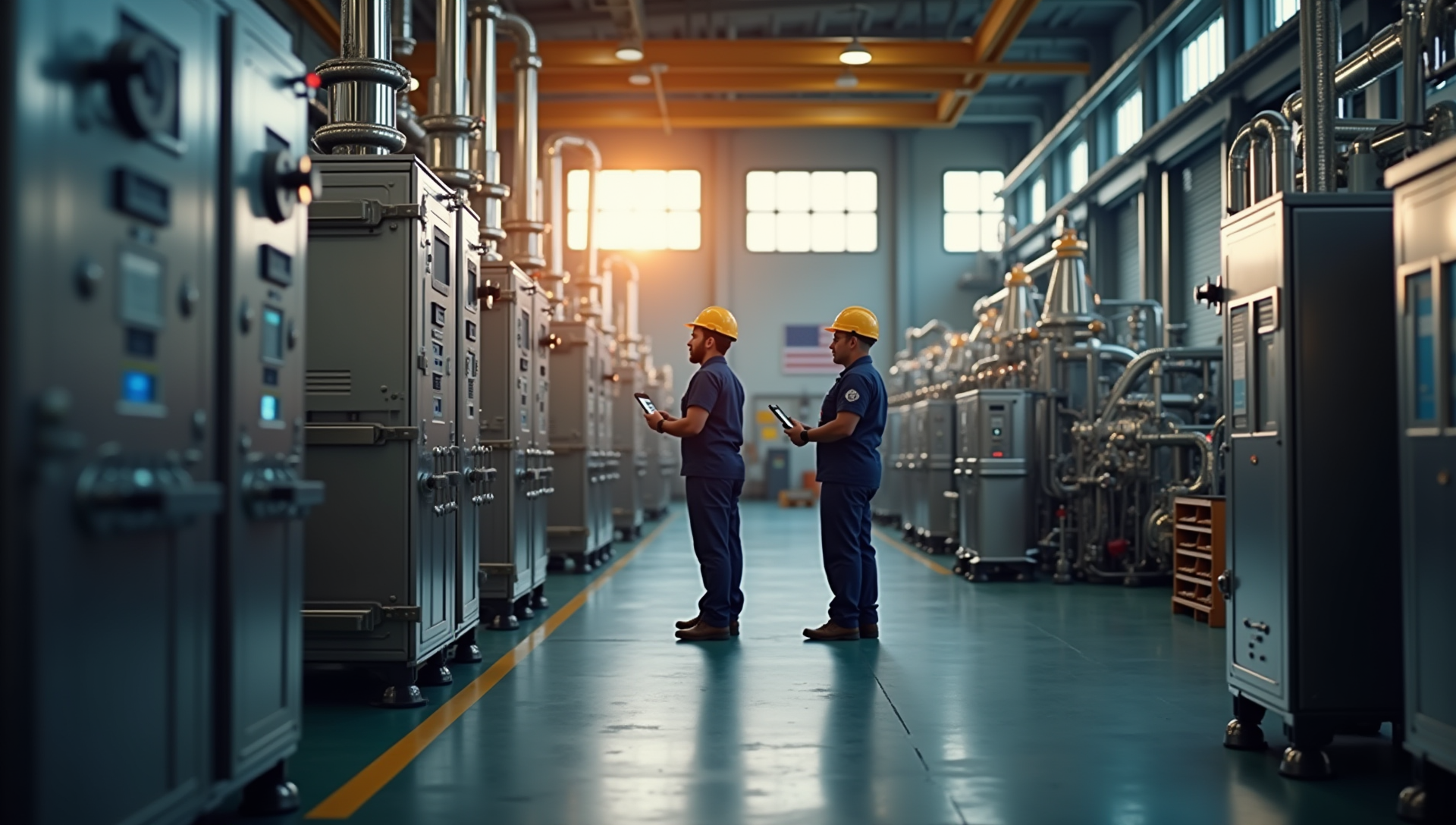
Green Li-ion's commercial-scaledomestic processing plant in Atoka, Oklahoma illustrates the alternative inpractice. The facility processes unsorted black mass directly intobattery-grade lithium carbonate, precursor cathode active material, andrecovered graphite, using patented hydrometallurgical technology. What used torequire overseas shipment and multi-stage refinement happens inside a singlemodular processing line, in about twelve hours per batch, at 99 percent productpurity.
That model matters for the DLAtender specifically. The solicitation calls for battery-grade lithium carbonateat 99.5 percent minimum purity. Domestic recyclers producing to thatspecification can compete for federal offtakes directly, without depending onan overseas refining step that may not be politically accessible in a futurecontingency.
The Federal Policy Stack Now Points One Direction
The DLA tender does not sit inisolation. It is one visible action in a policy stack that has been buildingfor years and now points squarely toward closed-loop domestic processing.
The Congressional ResearchService reports that the November 2025 Final Critical Minerals Listincludes 60 commodities, with lithium among them. The National DefenseStockpile itself operates under statutory authority in 50 U.S.C. Chapter 5,Subchapter III, which explicitly aims to reduce dependence on foreign sourcesduring national emergencies. The list, the stockpile, and the DLA solicitationshare the same underlying logic: identify materials the country cannot affordto lose access to, then build redundancy at home.
Federal funding follows thesame trajectory. The Departmentof Energy allocated over $3 billion to 25 projects across 14 states tobuild and expand domestic facilities for battery-grade critical minerals,battery components, cell manufacturing, and recycling. The NationalBlueprint for Lithium Batteries 2021-2030, coordinated by the FederalConsortium for Advanced Batteries, sets a target of 90 percent recycling ofconsumer content by 2030 and identifies end-of-life recycling as a core pillarof a resilient U.S. supply chain.
Read together, theseinstruments describe a coherent industrial strategy. Recycling is not treatedas an environmental afterthought. It is treated as a domestic mineral sourcethat reduces import reliance without requiring new mines or additional overseasprocessing dependencies.
How Domestic Supply Chain Battery Recycling Closes the Loop
The mechanics matter.Traditional pyrometallurgical recycling smelts batteries at high temperature,recovers cobalt and nickel alloys, and typically loses lithium to slag. Modern hydrometallurgicalblack mass processing operates at temperatures below 100 degrees Celsiusand can achieve 98percent recovery rates for lithium, along with cobalt, nickel, andmanganese at battery-grade purity.
Green Li-ion's approachcompresses that hydrometallurgical workflow into a single modular processingline. Rather than sending shredded material through a chain of intermediaterefineries, the line converts black mass directly into battery-grade lithium carbonate,precursor cathode active material, and recovered graphite. Each modular line isdesigned for rapid deployment inside existing recycling or manufacturingfacilities, which shortens the timeline from siting to operation from years tomonths.
Scale is the other question themarket keeps asking. Multi-year offtake agreements provide the demand certaintythat lets recyclers build capacity ahead of demand rather than chasing it.Green Li-ion's bindingofftake agreements, including a long-term NCM hydroxide supply arrangementfrom the Atoka facility through 2030, show how the commercial procurement modelcan mirror the fixed-price, multi-year structure the DLA is now applying tolithium carbonate.
The Procurement Imperative for Battery Manufacturers and Buyers
The DLA is signaling somethingbattery manufacturers and utility-scale storage buyers should read carefully.When the Pentagon locks in fixed-price, five-year supply of battery-gradelithium carbonate, it is treating price stability and origin certainty as morevaluable than optimizing for spot market prices. Commercial procurement teamsface the same underlying risks and can apply the same logic.
Domestic supply chain batteryrecycling supports that shift in three practical ways. First, it producesbattery-grade materials from feedstock already located inside the UnitedStates, so origin risk is materially reduced. Second, it enables multi-year offtakestructures with recyclers who can commit capacity in advance. Third, it alignswith the recycled content preferences and domestic sourcing frameworks embeddedin current federal battery policy, which can affect tax treatment andeligibility for downstream manufacturers.
None of this requires waitingfor new mines to be permitted, financed, and built. Every EV battery alreadyinstalled in a U.S. vehicle is a future feedstock stream. Every stationarystorage system reaching end of life is a lithium carbonate deposit sitting in awarehouse. The question is whether that material gets reprocessed here orshipped somewhere else. Procurement teams ready to evaluate domestic recycledlithium carbonate supply can begin partnership conversations with qualifiedrecyclers such as GreenLi-ion, whose commercial-scale operations and multi-year offtake structurematch the procurement model that federal buyers are now validating.
The Honest Summary
The DLA lithium carbonatetender is not, on its own, a demand shock. The volumes involved are modestrelative to global consumption. What it does is confirm that lithium hascrossed the line from commercial commodity to strategic material in U.S.policy, and that domestic supply chain battery recycling is now part of how thefederal government intends to secure it. Battery manufacturers, cathodeproducers, and utility procurement teams who assume commodity markets willresolve their supply risk are betting against a policy direction that has beenconsistent across administrations and is now backed by real contracts. Domesticrecycled lithium carbonate does not replace mined supply, but it provides asecond, resilient stream that sits inside the country, matches battery-gradespecifications, and can be procured on the same fixed-price, multi-year termsfederal buyers are already using. The near-term work is not additional debateabout whether recycling matters. It is contracting with the recyclers who can deliverto specification, at scale, on time.

.svg)