
Belgium's Umicore Expansion Plan: Benelux Leadership in Battery Materials Refining and Closed-Loop Cathode Production
Belgium has emerged as Europe's battery materials refining leader through Umicore's integrated operations spanning recycling, precursor production, and cathode active materials manufacturing. With over 130 years of metallurgical expertise centered in Hoboken, Belgium, Umicore processes several hundred thousand tons of materials annually while recovering more than 20 different metals through proprietary technologies achieving recovery rates exceeding 95% for battery-critical elements. The company's strategic investments in closed-loop cathode production, combined with its Brussels-headquartered IONWAY joint venture with Volkswagen's PowerCo, position the Benelux region as the organizational and operational hub for European battery materials circular economy development.
Umicore's comprehensive battery materials value chain demonstrates how vertically integrated operations create competitive advantages in an industry facing stringent EU regulatory requirements for recycled content and supply chain transparency. The company operates Europe's first cathode materials gigafactory in Poland, maintains advanced recycling facilities in Belgium, runs precursor refining operations in Finland, and manages research centers across four European countries. This distributed infrastructure enables Umicore to serve automotive manufacturers with sustainable battery materials while establishing circular material flows reducing dependence on geographically concentrated virgin material suppliers.
Hoboken Recycling Operations Anchor European Closed-Loop Infrastructure
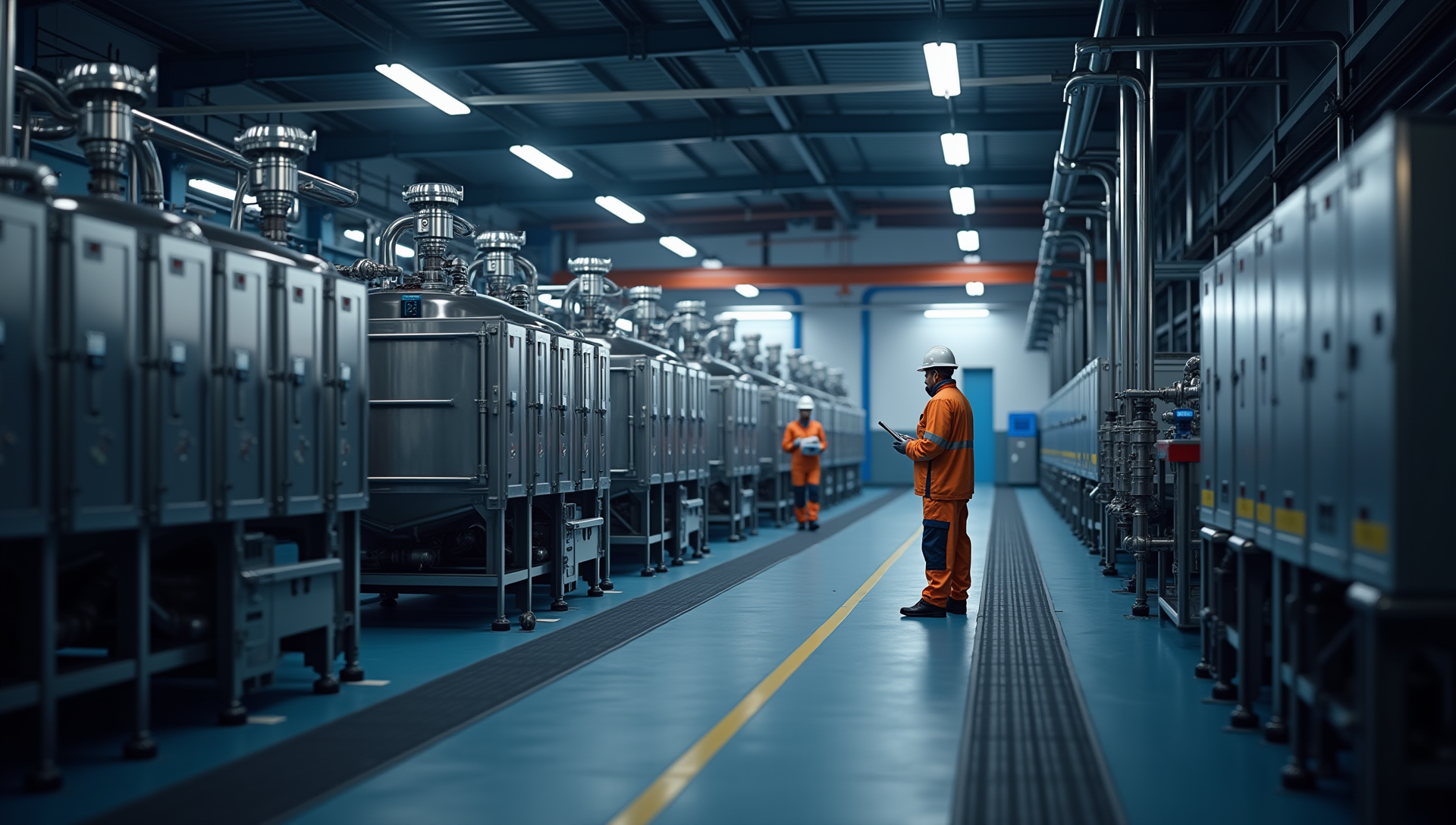
Umicore's battery recycling plant in Hoboken, Belgium represents one of the world's most sophisticated facilities for recovering critical metals from lithium-ion batteries and production scrap. The facility maintains annual capacity of 7,000 metric tons, equivalent to processing approximately 35,000 electric vehicle batteries. Operations commenced in 2011 targeting portable electronics batteries and first-generation EV batteries, with continuous process improvements reflecting more than a decade of accumulated recycling expertise.
The Hoboken facility employs Umicore's patented ultra-high temperature smelting technology combined with advanced hydrometallurgical refining processes. This hybrid approach achieves metallurgical recovery rates exceeding 95% for nickel, cobalt, and lithium, producing battery-grade quality materials suitable for direct reintegration into cathode production. The recovered metals meet specifications for new lithium-ion battery manufacturing without quality compromises, enabling true closed-loop material circulation.
In 2022, Umicore introduced the latest generation of its proprietary recycling technology following intensive research and pilot activities. The upgraded process represents a significant advancement in recycling performance with an optimized operating window specifically designed for electric vehicle batteries. The technology demonstrates significantly improved metallurgical efficiency with increased extraction rates for critical battery metals while ensuring minimal waste generation and reduced environmental impact. These enhancements position the facility to handle the anticipated surge in end-of-life EV batteries as Europe's electric vehicle fleet ages and requires recycling infrastructure.
Umicore established a partnership with Automotive Cells Company, supplying the ACC pilot plant in Nersac, France with comprehensive recycling services for production waste and end-of-life materials. The agreement reinforces industry standards for sustainability while demonstrating Umicore's commitment to providing customers with complete solutions spanning the battery lifecycle. ACC, founded in 2020 as a joint venture between Stellantis and TotalEnergies with support from French, German, and European authorities, aims to become the European market leader for automotive batteries emphasizing safety, performance, competitiveness, quality, and minimized carbon footprint.
The Hoboken site's location in the Belgian town established as an urban mining center creates unique advantages for circular economy operations. In more than 130 years, the facility has grown into one of the world's largest and most sophisticated refineries and recyclers of metals, processing materials ranging from gold in cell phones to palladium in automotive catalytic converters and cobalt for electric vehicle batteries. The exceptional urban mine processes several hundred thousand tons of materials annually through unique, high-tech, and sustainable processes extracting more than 20 different metals in their purest form. These metals are endlessly recyclable for new applications, converted into high-tech materials indispensable in countless everyday applications and sustainable mobility technologies.
Strategic Delays Reflect Market Realities While Maintaining Technological Leadership
Umicore's updated 2028 roadmap announced strategic adjustments to battery recycling expansion timelines reflecting evolving market conditions and slower-than-anticipated electric vehicle adoption rates. The company delayed investment in a large-scale battery recycling plant in Europe until at least 2032, focusing instead on optimizing existing pilot recycling operations in Hoboken during the near term. The decision responds to substantially reduced volume projections and an 18-month delay in ramping up customer-contracted volumes.
CEO Bart Sap highlighted the strategic review launched to reassess growth projections in the Battery Materials business beyond 2024, driven by strict capital allocation discipline necessitated by evolving market conditions, slower-than-expected EV adoption, and the requirement to align with new customer growth paths and regional policy shifts. The company aims to maximize cash generation from current assets while investing selectively for future capabilities. Umicore's Recycling segment targets revenues of approximately €800 million with an adjusted EBITDA margin of about 35% and return on capital employed exceeding 40% by 2028, while generating around €400 million in free cash flow over the period 2025 to 2028.
Despite delaying the large-scale recycling facility expansion, Umicore continues investing in the future through the Precious Metals Refining plant in Hoboken, Belgium. These investments deepen the facility's competitive edge while strengthening best-in-class environmental performance. The company maintains its position as an industry leader in recycling value creation, with anticipated performance remaining at industry-leading levels despite near-term capacity expansion deferrals.
The strategic timeline adjustments reflect broader industry challenges as European battery recycling capacity buildout significantly outpaces current end-of-life battery availability. Consulting firm Circular Energy Storage forecasts approximately 350,000 metric tons per year of recyclable material available from lithium-ion batteries in Europe by 2030. However, if companies follow through on announced plans, total European recycling capacity will exceed twice that amount, creating intense competition for feedstock access. Umicore's decision to optimize existing operations rather than aggressively expanding capacity demonstrates prudent capital allocation responding to market supply-demand dynamics.
The company's technological leadership remains undisputed despite capacity expansion delays. Umicore's proprietary pyrometallurgical and hydrometallurgical recycling processes enable recovery of key battery metals including nickel, cobalt, and lithium with yields over 95%, producing battery-grade materials closing the loop in battery supply chains. This technological capability positions Umicore to scale operations efficiently when end-of-life battery volumes justify capacity expansion investments, maintaining flexibility to respond to market developments without premature capital commitments.
IONWAY Joint Venture Integrates Umicore Into Volkswagen Supply Chain
Umicore and Volkswagen Group's battery company PowerCo established IONWAY, a Brussels-headquartered joint venture for large-scale industrial production of cathode active materials and precursor cathode active materials in Europe. Both parent companies aim to grow IONWAY's annual production capacity to 160 GWh by the end of the decade, corresponding to 2.2 million battery-electric vehicles. The partnership represents the first-of-its-kind cooperation between a European car manufacturer and a global leading producer of cathode active materials, establishing sustainable battery materials production for the EV transition and zero-emission future.
IONWAY supplies PowerCo's European battery cell factories with key battery materials, covering a large part of PowerCo's EU demand while providing Umicore with secured access to an important part of the European demand for EV cathode materials. The joint venture combines resources and know-how from both parents, creating synergies propelling the transition toward sustainable electric mobility. PowerCo operates gigafactories in Salzgitter, Germany and Valencia, Spain, with additional capacity planned in St. Thomas, Canada. The company targets total cell factory capacity of 240 GWh per year by 2030, with IONWAY supplying a substantial portion of European requirements.
Cathode active materials represent the key technological lever for battery performance, constituting the single biggest contributor to overall battery cost while defining carbon footprint characteristics. These strategically important input materials prove central to battery value creation and crucial for successful powertrain transition toward sustainable e-mobility. IONWAY's production will focus on nickel-manganese-cobalt chemistry variants serving entry, mass, and premium automotive segments, with potential expansion into high lithium manganese and next-generation solid-state battery materials as technologies mature.
Thomas Jansseune assumed the role of IONWAY's first Chief Executive Officer on July 1, 2023, following 22 years at Umicore. In his previous role, he led Umicore's New Business Incubation with projects spanning venture capital, solid-state batteries, decarbonization, battery recycling, and hydrogen electrolysis. This extensive experience across emerging battery technologies positions IONWAY to adapt quickly to evolving chemistry preferences and manufacturing requirements as the European EV market develops.
Under Umicore's 2028 roadmap, the company plans to contribute approximately €500 million in equity to IONWAY based on committed investment waves over the 2025-2028 period. This capital commitment demonstrates Umicore's long-term dedication to the partnership while maintaining strict capital allocation discipline across the broader organization. The joint venture structure enables Umicore to participate in European cathode materials growth while sharing investment requirements and market risks with PowerCo, creating a more balanced capital deployment approach compared to wholly-owned expansion alternatives.
IONWAY's Brussels headquarters location provides proximity to Umicore's corporate offices and Belgian operations, facilitating knowledge transfer and operational coordination. The joint venture benefits from Umicore's intellectual property and know-how made available through license agreements ensuring leading technology positions. PowerCo gains cost-competitive access to Umicore's innovative, sustainably sourced, and tailored high-performance battery materials for its unified cell strategy in Europe, benefiting from proven production capabilities and upstream expertise. The partnership unlocks significant synergies and economies of scale for both parties through coordinated production planning and integrated supply chain management.
Poland Gigafactory Establishes European Cathode Materials Production Leadership
Umicore inaugurated Europe's first battery materials gigafactory in Nysa, Poland in 2022, establishing large-scale cathode active materials production capacity serving European automotive manufacturers. The facility's annual production capacity reached 20 GWh by the end of 2023 and 40 GWh in 2024, with potential to rise to over 200 GWh by the second half of the decade. This growth trajectory supports Umicore's ambition to reach worldwide capacity exceeding 400 GWh by 2030, establishing fully integrated regional battery material value chains across three continents.
The European Investment Bank provided €125 million financing in 2020 to support construction of the cathode materials manufacturing facility in Poland. The EIB loan covered approximately half of the project costs in the initial phase, demonstrating European institutional support for developing battery value chain capacity within the EU. Construction began in 2019 with production commencing in July 2022, employing approximately 240 people initially with expansion to 400 employees by the end of 2023 as production ramped.
The Nysa facility operates with complete carbon neutrality through renewable electricity sourced from a nearby onshore wind farm. This sustainable energy approach enables Umicore's carbon-neutral growth ambitions while meeting increasingly stringent environmental performance requirements from automotive customers. The facility's state-of-the-art product and process technologies complement Umicore's metals refining and cathode precursor production facility in Kokkola, Finland, as well as world-class R&D and pioneering battery recycling activities in Hoboken, Belgium. These integrated elements demonstrate how Umicore functions as a reliable transformation partner for customers, supporting them locally on acceleration paths toward sustainable electric mobility.
Under the updated 2028 roadmap, Umicore limits remaining capital expenditures in Battery Cathode Materials to less than €500 million, with €370 million dedicated to finishing the footprint in Nysa and Korea. These final investments focus on delivering customer and product commitments while unlocking economies of scale. The company will bring cathode active materials capacity in Poland to 45 GWh and Korea to 40 GWh, leveraging existing infrastructure investments while avoiding premature expansion beyond confirmed customer demand.
The Poland operations benefit from strong customer contracts including take-or-pay provisions and additional protection mechanisms, reducing demand risk while securing revenue streams. Umicore increasingly focuses on customer and platform diversification, reducing concentration risks associated with single automotive partners or vehicle programs. This strategic approach maintains production flexibility while ensuring capacity utilization across varying market conditions and shifting consumer preferences among battery chemistries and vehicle segments.
Kokkola Refining Operations Complete Integrated European Value Chain
Umicore's metals refining and cathode precursor production facility in Kokkola, Finland represents a critical link in the company's integrated European battery materials value chain. The facility processes raw materials and intermediate products into high-purity metal compounds suitable for precursor cathode active material production. Finland's location provides access to regional metal concentrates and recycled feedstocks while maintaining proximity to European cathode materials manufacturing and automotive assembly operations.
The Kokkola operations complement Hoboken's recycling activities by processing recovered metals alongside virgin materials, creating blended feedstocks meeting customer specifications for recycled content percentages. This integration proves essential for compliance with EU Battery Regulation mandatory recycled content requirements taking effect in 2031. The regulation requires 16% cobalt, 6% lithium, and 6% nickel recycled content by August 18, 2031, increasing to 26% cobalt, 12% lithium, and 15% nickel by August 18, 2036. Umicore's ability to produce precursor materials incorporating specific recycled content percentages provides competitive advantages serving customers facing these regulatory obligations.
The facility's refining capabilities extend beyond battery materials to platinum group metals and specialty materials, creating operational synergies and shared infrastructure reducing unit costs. This multi-metal processing capability enables Umicore to optimize feedstock selection based on market conditions and availability, maintaining production continuity despite disruptions in specific supply chains. The flexibility proves particularly valuable during periods of volatile commodity pricing or geopolitical supply chain tensions affecting traditional sourcing routes.
Kokkola's integration with Umicore's broader European operations demonstrates the company's systems approach to battery materials production. Rather than operating isolated facilities focusing on single process steps, Umicore coordinates activities across recycling, refining, precursor production, and cathode materials manufacturing. This vertical integration creates opportunities for process optimization, quality control, and supply chain management that independent operators cannot replicate without similar scale and geographic coverage.
Research and Development Infrastructure Supports Technology Leadership
Umicore maintains research, development, and innovation centers in Olen and Hoboken, Belgium; Kokkola, Finland; Hanau, Germany; and Nysa, Poland. The European Investment Bank provided €350 million financing in February 2024 to support Umicore's European RDI activities in rechargeable battery materials technologies for electric vehicles and battery recycling. The eight-year loan with competitive financing conditions contributes to developing innovative technologies across Umicore's European research network.
Umicore invested €316 million or 7.6% of revenue in research and development during 2022, demonstrating sustained commitment to technology advancement despite market uncertainties. The company's EV battery materials innovations and technologies serve entry, mass, and premium automotive segments with chemistries ranging from nickel-manganese-cobalt to future high lithium manganese and next-generation solid-state and sodium-ion battery technologies. This diversified R&D portfolio positions Umicore to respond quickly as automotive manufacturers shift chemistry preferences based on cost, performance, or supply chain considerations.
The research centers collaborate on developing next-generation recycling processes addressing emerging battery chemistries including lithium iron phosphate and sodium-ion technologies. While nickel-manganese-cobalt batteries contain high concentrations of valuable metals justifying recycling economics, LFP and sodium-ion chemistries present different economic models requiring process innovations to achieve profitable recovery. Umicore's R&D investments target these challenges, ensuring recycling capabilities remain relevant as battery chemistry mix evolves across European vehicle fleets.
Umicore's large-scale prototyping center for solid-state battery materials accelerates development timelines for next-generation technologies. Solid-state batteries promise improved energy density, safety, and longevity compared to conventional lithium-ion designs, but require fundamentally different cathode materials and manufacturing processes. The prototyping facility enables Umicore to work closely with automotive partners developing solid-state vehicle programs, ensuring cathode materials readiness aligns with vehicle production schedules.
The distributed research network across five European locations creates redundancy and resilience while tapping into regional expertise clusters and talent pools. Belgium's strong chemical engineering capabilities, Finland's metals processing heritage, Germany's automotive engineering ecosystem, and Poland's growing battery manufacturing workforce all contribute specialized knowledge to Umicore's innovation efforts. This geographic diversity strengthens the company's ability to attract top technical talent while maintaining connections to key customer research and development teams across Europe.
Closed-Loop Business Model Differentiates Umicore in Competitive European Market
Umicore's closed-loop business model represents a fundamental strategic differentiator in the increasingly competitive European battery materials market. The company's ability to offer customers complete solutions spanning raw material sourcing, refining, precursor production, cathode materials manufacturing, and end-of-life recycling creates value propositions that single-stage processors cannot match. Automotive manufacturers seeking supply chain transparency and sustainability credentials increasingly value partners capable of demonstrating material traceability from mine to vehicle to recycling and back to production.
The closed-loop approach addresses critical supply chain security concerns as European automotive manufacturers seek to reduce dependence on Asian battery materials suppliers. By establishing comprehensive European processing infrastructure, Umicore enables regional material flows reducing exposure to intercontinental logistics disruptions, trade policy changes, or geopolitical tensions affecting long-distance supply chains. The geographic concentration of operations within Europe creates responsiveness and flexibility advantages compared to globally distributed supply networks.
Umicore's recycling capabilities provide strategic raw material sourcing optionality increasingly valuable as virgin material markets face supply constraints and price volatility. The company can adjust the blend of virgin and recycled inputs based on availability and economics, maintaining production continuity despite disruptions in specific sourcing channels. This flexibility proves particularly important for cobalt, where concentrated production in the Democratic Republic of Congo creates supply chain risks that diversified sourcing partially mitigates through recycling integration.
The environmental performance advantages of closed-loop operations extend beyond regulatory compliance to represent genuine competitive differentiation as automotive manufacturers face increasing pressure to reduce product carbon footprints. Materials recovered through advanced recycling processes like GREEN HYDROREJUVENATION technology demonstrate substantially lower carbon intensity compared to virgin mining and refining operations. Life cycle assessments consistently show recycled battery materials achieving 19-58% lower carbon footprints across different metals, providing automotive customers with quantifiable sustainability improvements for Scope 3 emissions reduction targets.
Umicore's partnerships with automotive manufacturers increasingly incorporate closed-loop commitments where end-of-life batteries return to Umicore facilities for recycling, with recovered materials flowing back to cathode production serving the same automotive partners. These circular agreements create long-term strategic relationships extending beyond traditional supplier-customer transactions to establish mutual dependence and aligned incentives for maximizing material recovery and minimizing waste. The partnership model proves particularly attractive to automotive brands positioning sustainability as core brand attributes requiring verifiable circular economy practices throughout supply chains.
Benelux Geographic Advantages Support Pan-European Battery Materials Distribution
Belgium's central location within the Benelux region and broader European industrial heartland creates strategic logistics advantages for battery materials distribution. Brussels, Amsterdam, and Rotterdam form an interconnected logistics hub with world-class port facilities, rail networks, and highway systems enabling efficient material flows to automotive manufacturing clusters in Germany, France, and Central Europe. Umicore's Belgian operations access this infrastructure, reducing transportation costs and lead times compared to more peripherally located processing facilities.
The Port of Rotterdam represents Europe's largest maritime gateway, handling substantial volumes of battery materials imports and exports. Proximity to Rotterdam enables Umicore to efficiently receive raw material shipments from global sources while facilitating exports of refined products and cathode materials to international customers. The port's specialized chemical handling infrastructure and experienced logistics providers familiar with hazardous materials regulations streamline operations for battery materials requiring special handling procedures.
Belgium's multilingual workforce and international business culture support Umicore's operations serving customers across Europe and globally. The company's ability to conduct business in Dutch, French, German, and English facilitates customer relationships and regulatory compliance across multiple European jurisdictions with different language requirements and business norms. This linguistic flexibility proves valuable as battery materials regulations increasingly require documentation and reporting in local languages for market access.
The Brussels location provides access to European Union institutions and policymakers shaping battery materials regulations and industrial policy. Umicore's proximity to EU decision-makers enables active participation in policy development processes affecting recycling standards, recycled content requirements, and supply chain transparency regulations. This institutional access creates opportunities to contribute technical expertise to regulatory development while understanding policy directions early enough to adjust business strategies proactively rather than reactively responding to finalized regulations.
The Benelux region's concentration of chemical processing, metallurgical, and advanced manufacturing industries creates ecosystem advantages including specialized equipment suppliers, technical service providers, and skilled workforce availability. Umicore benefits from established supplier networks and talent pools developed through generations of industrial activity, reducing the time and cost required to establish and scale operations compared to regions lacking comparable industrial heritage.
Hydrometallurgical Processing Advances Enable High-Purity Material Recovery
Umicore's continuous advancement of hydrometallurgical processing technologies drives improvements in recovery efficiency and product purity while reducing environmental impact compared to conventional recycling approaches. The company's proprietary processes combine pyrometallurgical pre-treatment with advanced hydrometallurgical refining, optimizing each step to maximize valuable metal recovery while minimizing energy consumption and waste generation.
The ultra-high temperature smelting pre-treatment concentrates valuable metals while eliminating organic components and separating aluminum and iron into slag phases. This pyrometallurgical step simplifies subsequent hydrometallurgical processing by creating concentrated alloy feeds with known compositions. The controlled high-temperature environment also ensures complete destruction of electrolytes and binders, addressing safety concerns while recovering energy value from organic components through heat capture systems.
Advanced hydrometallurgical refining employs selective leaching chemistries to dissolve target metals from the pyrometallurgical alloy, followed by solution purification and precipitation steps producing high-purity metal compounds. GREEN HYDROREJUVENATION technology demonstrates how careful control of solution chemistry, temperature, and reaction conditions enables efficient metal separation while minimizing reagent consumption and waste generation. The process achieves recovery rates exceeding 90% for cobalt, nickel, and copper, with lithium recovery reaching 50-80% depending on feedstock characteristics and process optimization.
The battery-grade quality of recovered materials represents a critical performance metric distinguishing advanced recycling from basic metal recovery operations. Umicore's processes produce metal compounds meeting or exceeding specifications for direct use in precursor cathode active material production, enabling true closed-loop circulation without quality degradation. This performance eliminates the need for additional refining steps that would increase costs and environmental footprint while reducing recovery yields.
Continuous process innovation focuses on expanding the range of battery chemistries processable through existing facilities. As lithium iron phosphate and sodium-ion batteries gain European market share, recycling operations must adapt to feedstocks with different metal compositions and processing requirements. Umicore's R&D investments target flexible processing approaches capable of handling mixed battery chemistry inputs, maintaining economic recovery across diverse feedstock streams as the European battery market evolves beyond dominance of nickel-manganese-cobalt chemistries.
European Regulatory Compliance Drives Competitive Positioning
Umicore's comprehensive European battery materials infrastructure positions the company advantageously as regulatory requirements for recycled content, carbon footprint disclosure, and supply chain transparency take effect across EU member states. The EU Battery Regulation 2023/1542 establishes the most stringent battery lifecycle requirements globally, creating competitive advantages for vertically integrated producers capable of demonstrating full value chain control and material traceability.
Digital battery passport requirements taking effect in February 2027 for batteries exceeding 2 kWh capacity demand comprehensive data collection and reporting throughout battery lifecycles. Umicore's integrated operations from refining through recycling enable complete material chain-of-custody documentation, tracking specific metal batches from source through processing, production, vehicle installation, end-of-life collection, recycling, and return to production. This traceability capability proves difficult for competitors relying on multiple independent suppliers and processors across fragmented supply chains.
Carbon footprint declaration requirements mandatory from 2025 favor Umicore's renewable energy-powered operations and high-efficiency recycling processes. The company's Nysa facility operates with complete carbon neutrality through renewable electricity, while Hoboken recycling activities demonstrate substantially lower emissions compared to virgin material production. Life cycle assessment data supporting carbon footprint declarations provides Umicore with marketing differentiation as automotive manufacturers seek low-carbon supply chains reducing Scope 3 emissions.
Extended Producer Responsibility frameworks implemented across European member states create obligations for battery producers to finance collection and recycling systems ensuring batteries reach appropriate processing facilities. Umicore's established recycling infrastructure enables the company to offer comprehensive EPR compliance services to battery producers and automotive manufacturers, simplifying their regulatory burden while securing feedstock access for recycling operations. This dual benefit of regulatory compliance service provision while ensuring material supply creates strategic advantages competitors without recycling capabilities cannot replicate.
Material recovery efficiency targets specified in the EU Battery Regulation require 90% recovery for cobalt, copper, lead, and nickel by December 31, 2027, increasing to 95% by December 31, 2031. Lithium recovery must reach 50% by 2027 and 80% by 2031. Umicore's existing processes already achieve or exceed these targets, providing regulatory certainty and avoiding the need for significant process redesign or capital investment to meet future requirements. Competitors operating less efficient recycling technologies face expensive upgrades or risk market access restrictions if unable to achieve specified recovery rates.
Belgium's Battery Materials Leadership Shapes European Circular Economy Development
Umicore's Belgian operations represent more than isolated industrial facilities; they embody comprehensive battery materials ecosystems integrating recycling, refining, research, and strategic coordination functions establishing Belgium as Europe's organizational hub for circular battery economy development. The concentration of expertise, infrastructure, and institutional relationships in Belgium creates network effects attracting complementary investments and partnerships reinforcing the region's competitive position.
The company's decision to headquarter IONWAY in Brussels rather than at production locations in Poland or other European sites demonstrates Belgium's strategic importance extending beyond manufacturing operations to encompass financial, legal, and organizational coordination functions. Brussels provides access to European institutions, financial markets, legal expertise, and international business services supporting complex joint venture management and cross-border operations. This institutional infrastructure proves essential for coordinating activities across multiple countries and integrating diverse partner organizations into unified operational entities.
Belgium's battery materials sector development benefits from supportive government policies encouraging circular economy investments through financial incentives, streamlined permitting, and research funding. The European Investment Bank's substantial lending to Umicore demonstrates institutional support for Belgian battery materials infrastructure as critical to European industrial strategy. Government engagement in facilitating industrial development while managing environmental impacts creates stable operating environments encouraging long-term capital deployment.
For battery manufacturers and automotive companies across Europe, Belgium's established battery materials infrastructure provides secure, proximate supply options reducing dependence on intercontinental logistics and geographically distant suppliers. The ability to source cathode materials, verify recycled content percentages, and establish closed-loop partnerships with Belgian operations creates strategic flexibility and supply chain resilience. As European automotive production continues transitioning toward electric vehicles, Belgium's materials processing leadership positions the nation as an essential node in regional battery value chains.
Umicore's integrated approach combining Hoboken's recycling leadership, Kokkola's refining capabilities, Nysa's cathode production scale, IONWAY's strategic automotive partnerships, and Brussels' organizational coordination demonstrates how comprehensive battery materials value chains require coordination across multiple specialized facilities and capabilities. The success of Belgium's battery materials sector reflects decades of metallurgical expertise, strategic investments in emerging technologies, and institutional support creating environments where circular economy principles transform from aspirational concepts into operational reality generating competitive advantages for European manufacturing.

.svg)