
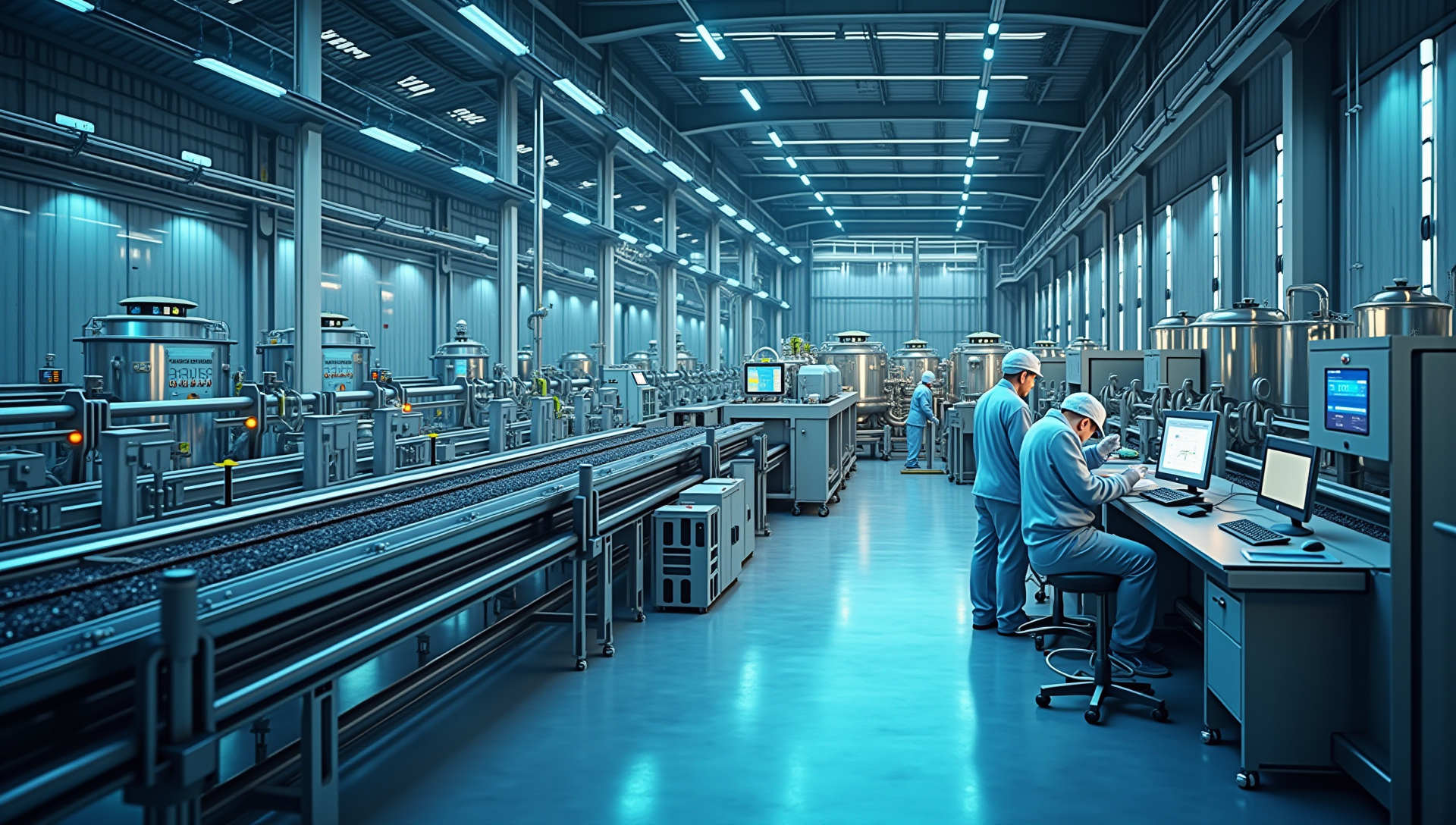
Poland's Battery Recycling Infrastructure Investment: Central Europe Builds Processing Capacity for Regional EV Manufacturing
Poland has emerged as Central Europe's most significant battery recycling investment destination, with over €715 million in committed capital transforming the nation into a critical processing hub for the region's rapidly expanding electric vehicle manufacturing sector. As home to Europe's largest lithium-ion battery production facility and approximately 50% of the EU's total battery manufacturing capacity, Poland's strategic investments in recycling infrastructure create the foundation for a comprehensive circular economy serving automotive corridors connecting Germany, Czech Republic, Slovakia, and Hungary.
The concentration of battery recycling capital in Poland reflects broader European efforts to achieve supply chain independence while meeting stringent regulatory requirements under the EU Battery Regulation 2023/1542. With mandatory recycled content requirements taking effect in 2031 and the Critical Raw Materials Act establishing ambitious 2030 benchmarks for domestic processing capacity, Poland's infrastructure investments position Central European manufacturers to meet compliance obligations while reducing dependence on imported virgin materials from geographically concentrated suppliers.
Poland's Manufacturing Foundation Drives Recycling Infrastructure Development
Poland's battery recycling infrastructure expansion builds directly upon the nation's established position as Europe's lithium-ion battery manufacturing leader. LG Energy Solution's gigafactory in Wrocław represents the continent's largest EV battery production center, with current capacity of 86 GWh expanding to 115 GWh annually. This single facility supplies batteries for major automotive manufacturers including Volkswagen, Audi, BMW, Porsche, and Mercedes-Benz, establishing Poland as the central node in European battery supply chains.
The manufacturing scale creates substantial opportunities for recycling operations targeting production scrap streams. Battery manufacturing generates black mass during electrode production, cell assembly, and quality control processes. Unlike end-of-life batteries requiring collection infrastructure, manufacturing scrap provides immediate, consistent feedstock for recycling facilities. LG Energy Solution confirmed its Wrocław facility manufactures both EV batteries and energy storage system batteries using lithium iron phosphate chemistry, diversifying production while maintaining proximity to recycling infrastructure.
Poland's geographic position at the center of European automotive manufacturing corridors amplifies the strategic value of recycling investments. The nation provides efficient logistics access to Germany's automotive heartland, Czech Republic's growing EV component sector, Slovakia's battery assembly operations, and Hungary's expanding gigafactory investments. This central location reduces transportation costs for both battery collection and recycled material distribution, creating competitive advantages for facilities processing materials across regional supply chains.
Elemental Strategic Metals Establishes Polvolt Recycling Complex in Zawiercie
The Polvolt project in Zawiercie represents Poland's most significant battery recycling infrastructure investment, with total capital commitments exceeding €715 million (3 billion PLN) for a comprehensive metals recovery complex. Elemental Battery Metals secured a €240 million government grant through the European Union's Temporary Crisis and Transition Framework, covering approximately 35% of total project costs for the facility's second phase expansion.
The European Commission designated Polvolt as one of 47 Strategic Projects under the Critical Raw Materials Act, recognizing its contribution to European supply chain security. Poland secured two Strategic Project designations among the €22.5 billion in total investments across 13 EU member states. Strategic Project status provides streamlined permitting with maximum 15-month timelines for processing and recycling operations, compared to standard procedures often requiring several years for environmental approvals and construction permits.
The Zawiercie facility's first phase, completed in 2024, processes 12,000 metric tons of lithium-ion batteries and 6,000 metric tons of automotive catalytic converters annually. The complex recovers eight critical materials identified by the European Commission: cobalt, lithium, manganese, copper, nickel, plus platinum group metals including palladium, platinum, and rhodium. This comprehensive recovery capability positions the facility to process multiple waste streams while maximizing material valorization across diverse battery chemistries and industrial catalysts.
Elemental's second phase expansion, supported by the €240 million TCTF grant, will construct an adjacent facility creating approximately 250 additional jobs in production, engineering, and administration roles. The expansion includes advanced hydrometallurgical refining processes producing battery-grade materials meeting specifications for direct reintegration into manufacturing supply chains. The facility's location in Poland's southern industrial region provides access to established transportation networks while leveraging regional technical workforce expertise developed through decades of metals processing and manufacturing operations.
The Polvolt project also secured a €150.5 million grant from the European Commission's Innovation Fund, one of the world's largest funding programs for low-emission technologies. The Innovation Fund, managed by the Directorate-General for Climate Action and financed through EU Emissions Trading System allowance auctions, selected Polvolt based on its innovative combination of environmentally friendly metallurgical processes with black mass recycling derived from end-of-life batteries and manufacturing waste.
Ascend Elements Brings Hydro-to-Cathode Technology to Polish Market
American battery materials company Ascend Elements received a $320 million grant offer (1.22 billion PLN) from Poland's Ministry of Economic Development and Technology to construct a precursor cathode active material manufacturing facility in southwestern Poland. The cash subsidy represents one of the largest grants ever offered by the Republic of Poland, demonstrating government commitment to attracting advanced battery materials technology as part of the EU's Temporary Crisis and Transition Framework supporting net-zero economy transition.
Ascend Elements plans to commercialize its proprietary Hydro-to-Cathode technology for manufacturing nickel-manganese-cobalt precursor cathode active material from recycled lithium-ion battery content. The direct synthesis process produces new battery materials more efficiently than traditional recycling methods, with recent life cycle assessment studies demonstrating 49% lower carbon dioxide equivalent emissions and 26% lower particulate matter emissions compared to conventional battery recycling approaches. By 2030, Ascend Elements aims to achieve 86% lower CO2e emissions and 94% lower PM 2.5 emissions through additional decarbonization efforts.
The Polish facility will produce precursor cathode active material for electric vehicle batteries, smartphones, and electronics applications, with production scheduled to begin in 2028 creating at least 200 jobs. The project strengthens Poland's position in the battery materials value chain by adding high-value engineered materials production to the nation's existing gigafactory manufacturing and recycling infrastructure. Poland's Deputy Minister noted the investment represents one of the largest U.S. investments in recent years while supporting regional development including technology transfer and cooperation with local educational institutions.
Ascend Elements established a 50-50 joint venture with Elemental Strategic Metals in 2024, operating the AE Elemental facility in Zawiercie with capacity to recycle 12,000 metric tons of batteries annually, equivalent to approximately 28,000 EV batteries. The joint venture produces black mass from discharged and shredded batteries, which can be processed into engineered battery materials including cathode active material and precursor cathode material. Both partners committed to jointly invest in large-scale lithium extraction from black mass, with lithium extraction capabilities producing up to 20,000 metric tons annually beginning operations in 2026.
The combination of Ascend Elements' advanced materials technology with Elemental's established recycling operations and global collection network creates an integrated value chain from battery collection through black mass production to engineered cathode materials manufacturing. This vertical integration model demonstrates how recycling infrastructure investments support multiple value chain segments while establishing Poland as a comprehensive battery materials processing hub serving European manufacturing requirements.
LG Energy Solution Integrates Polish Manufacturing with European Recycling Networks
LG Energy Solution formalized its recycling strategy through a joint venture with French waste management company Derichebourg to construct a battery recycling plant in France's Val-d'Oise region, with operations scheduled to begin in 2027. Under the agreement, LG Energy Solution supplies battery scrap from its Poland facility while Derichebourg provides end-of-life EV batteries collected from France and surrounding countries.
The partnership accelerates development of a closed-loop resource circulation system in Europe, aligning with LG Energy Solution's goals to enhance raw material sourcing stability and strengthen value chain competitiveness. The collaboration addresses EU Battery Regulation requirements mandating minimum recycled content levels in batteries sold in Europe starting in 2031. The regulation requires 16% cobalt, 6% lithium, and 6% nickel recycled content by August 18, 2031, increasing to 26% cobalt, 12% lithium, and 15% nickel by August 18, 2036. All batteries placed on the EU market regardless of manufacturing location must meet these specifications.
LG Energy Solution's Wrocław facility plays a strategic role in the European material cycle despite the recycling plant's location in France. Manufacturing scrap generated during battery production provides consistent, high-quality feedstock for recycling operations. Production waste typically contains higher concentrations of valuable materials compared to end-of-life batteries, with known composition profiles simplifying processing requirements. The facility's integration into recycling networks demonstrates how large-scale manufacturing operations anchor regional circular economy development.
The Wrocław gigafactory's expansion to include energy storage system production diversifies LG Energy Solution's product portfolio while maintaining recycling integration advantages. Energy storage batteries using lithium iron phosphate chemistry present different recycling challenges compared to nickel-manganese-cobalt chemistries dominating EV applications. LFP batteries contain lower concentrations of high-value metals like cobalt and nickel, requiring different processing approaches to achieve economic recovery. Poland's developing recycling infrastructure must address both chemistry types to support comprehensive circular economy development across diverse battery applications.
Critical Raw Materials Act Establishes Framework for Strategic Infrastructure Investment
The European Union's Critical Raw Materials Act creates explicit 2030 benchmarks driving battery recycling infrastructure investments across member states. The regulation requires EU domestic capacity to meet at least 10% of annual consumption through extraction, 40% through processing, and 25% through recycling for strategic raw materials including lithium, cobalt, nickel, manganese, and graphite. No more than 65% of annual consumption for each strategic raw material at any processing stage can come from a single third country, forcing diversification away from concentrated supplier dependencies.
Poland's recycling infrastructure investments directly address the 25% recycling benchmark while contributing to the 40% processing target. The European Commission selected 47 Strategic Projects spanning 13 EU member states with combined capital investment requirements of approximately €22.5 billion. Among the strategic raw materials covered by these projects, lithium attracted 22 projects, nickel 12 projects, cobalt 10 projects, manganese 7 projects, and graphite 11 projects, strengthening the EU battery value chain through coordinated infrastructure development.
Strategic Project designation provides concrete benefits accelerating infrastructure deployment. Projects receive streamlined permitting with maximum timelines of 27 months for extraction operations and 15 months for processing or recycling facilities, compared to standard procedures often requiring 5-7 years for comprehensive environmental assessments and construction permits. Strategic Projects also receive coordinated support from the European Commission, member state governments, and financial institutions including the European Investment Bank, improving access to project financing and reducing capital costs.
The CRMA framework establishes Environmental, Social, and Governance criteria for all Strategic Projects while requiring demonstration of clear cross-border benefits for the EU. Poland's Polvolt facility meets these requirements by processing materials collected from Elemental Group's global network spanning 100 facilities across 35 countries, including substantial feedstock from other European nations. The recovered metals serve strategic industries including energy, defense, automotive, and telecommunications sectors, with materials distributed across European manufacturing operations rather than concentrated in single markets.
China's dominance of critical materials processing creates the geopolitical context driving European infrastructure investments. As of 2024, China controls approximately 74% of global lithium carbonate refining, around 90% of rare earth element refining capacity, and 74% of cobalt refining capacity. This concentration creates significant vulnerabilities for Europe's battery and clean energy sectors, demonstrated through China's recent export restrictions on critical raw materials including graphite and rare earths. Poland's recycling infrastructure investments reduce these dependencies by establishing domestic processing capacity for materials already present in European manufacturing and waste streams.
Regional Automotive Manufacturing Clusters Drive Collection Infrastructure Development
Central Europe's concentrated automotive manufacturing operations create favorable conditions for battery recycling infrastructure serving multiple national markets through shared collection and processing systems. Poland's strategic central European position provides efficient logistics access to battery manufacturing and vehicle assembly operations across neighboring countries, reducing transportation costs while maximizing feedstock availability.
Germany's automotive sector, concentrated in southern Bavaria and northern regions, generates substantial battery production scrap and faces growing end-of-life battery volumes as EV adoption accelerates. Czech Republic hosts multiple battery component manufacturers and assembly operations supporting regional automotive production. Slovakia's battery manufacturing investments include production facilities serving European and Asian automotive brands. Hungary attracted significant gigafactory investments from South Korean and Chinese battery manufacturers establishing production capacity for European vehicle assembly operations.
The geographic clustering of manufacturing operations enables collection infrastructure serving multiple facilities through shared logistics networks. Battery recycling economics improve substantially when collection routes access multiple large-volume generators rather than dispersed individual sources. Poland's location at the intersection of these automotive corridors positions recycling facilities to aggregate materials from the highest-density manufacturing regions while maintaining reasonable transportation distances.
Collection infrastructure development faces regulatory support through EU Battery Directive requirements establishing producer responsibility frameworks. Battery manufacturers and importers must finance collection systems ensuring batteries reach appropriate recycling facilities rather than entering general waste streams. These extended producer responsibility systems create consistent feedstock supplies for recycling operations while reducing risks of material loss to informal processing or landfill disposal.
The facilities implement comprehensive environmental management systems addressing emissions control, water treatment, and energy efficiency to minimize processing impact. Closed-loop processing systems capture and reuse solvents and chemicals, while continuous monitoring ensures compliance with EU environmental standards. Several operations integrate renewable energy systems reducing the carbon footprint of energy-intensive recycling processes, improving overall sustainability performance of recovered materials compared to primary extraction and refining.
Hydrometallurgical Processing Achieves High Recovery Rates for Battery-Grade Materials
Poland's battery recycling facilities employ advanced hydrometallurgical processing technologies achieving recovery rates exceeding 90% for cobalt, nickel, copper, and manganese, with lithium recovery reaching 50% by 2027 and 80% by 2031 to meet EU Battery Regulation requirements. These recovery rates match or exceed specifications for battery-grade materials, enabling direct reintegration into manufacturing supply chains without quality compromises.
Hydrometallurgical processing uses chemical leaching solutions to dissolve valuable metals from black mass, followed by precipitation and purification steps producing high-purity metal compounds. The process offers several advantages over pyrometallurgical smelting approaches. Hydrometallurgy achieves higher recovery rates for lithium, which volatilizes during high-temperature smelting. The process also consumes less energy compared to maintaining furnaces at temperatures exceeding 1,400°C required for battery material smelting. Lower processing temperatures reduce carbon emissions and operating costs while improving process control and product consistency.
GREEN HYDROREJUVENATION technology demonstrates how advanced hydrometallurgical approaches optimize recovery economics while minimizing environmental impact. The process treats black mass through controlled chemical dissolution, selectively extracting target metals while minimizing reagent consumption and waste generation. Careful management of leaching chemistry and processing parameters ensures high-purity outputs meeting battery manufacturer specifications for direct cathode material production.
The technology's success depends on precise control of solution chemistry, temperature, and reaction times. Different battery chemistries require adjusted processing parameters to maximize recovery of specific metal combinations. Nickel-manganese-cobalt batteries contain different metal ratios compared to nickel-cobalt-aluminum chemistries, requiring flexible processing capable of handling variable feedstock compositions. Lithium iron phosphate batteries present distinct challenges with lower concentrations of high-value metals, demanding different economic models focused on volume processing rather than premium metal recovery.
Material recovery efficiency directly impacts recycling economics and regulatory compliance. The EU Battery Regulation mandates minimum recovery efficiency targets of 90% for cobalt, copper, lead, and nickel by December 31, 2027, increasing to 95% by December 31, 2031. Lithium recovery must reach 50% by 2027 and 80% by 2031. Facilities achieving these targets gain competitive advantages through higher material yields and regulatory certainty, while operations failing to meet specifications face market access restrictions and potential penalties.
Technical Workforce Development Supports Advanced Processing Operations
Poland's battery recycling infrastructure expansion creates substantial employment in high-skilled technical roles including process engineering, chemical analysis, environmental management, and quality assurance. The Polvolt project directly employs approximately 200 workers in its first phase operations, with the second phase expansion adding approximately 250 positions. Ascend Elements' planned facility expects to create at least 200 jobs when production begins in 2028. These employment figures represent direct facility operations, with additional indirect employment in supporting services including logistics, equipment maintenance, and laboratory analysis.
The workforce requirements emphasize technical education and specialized training in metallurgical processing, chemical engineering, and environmental management. Poland's established industrial base provides advantages in technical workforce availability compared to regions without comparable manufacturing heritage. The nation's universities and technical colleges offer relevant degree programs in chemistry, materials science, and chemical engineering, creating pipelines for qualified candidates.
Industry partnerships with educational institutions strengthen workforce development while ensuring curriculum alignment with evolving technology requirements. LG Energy Solution's operations collaborate with local universities on research initiatives and student internships, developing specialized expertise in battery technology and processing. Elemental Strategic Metals similarly engages regional educational institutions to build technical competencies in metals recovery and refining operations.
The technical positions offer compensation above regional manufacturing averages, contributing to economic development in areas historically dependent on traditional heavy industry. Zawiercie's location in southern Poland's industrial region provides established infrastructure and housing while avoiding the higher labor costs of major metropolitan areas. This balance between technical workforce availability and competitive operating costs creates favorable conditions for recycling facility development.
Advanced processing operations require continuous workforce training as technologies evolve and regulatory requirements change. Battery chemistry developments, new recycling processes, and changing environmental standards demand ongoing education programs ensuring workers maintain current expertise. The facilities invest in training programs covering safety procedures, equipment operation, quality control protocols, and environmental compliance requirements, maintaining high operational standards while supporting career development.
Financial Support Mechanisms Reduce Capital Barriers for Infrastructure Development
Poland's battery recycling infrastructure development benefits from coordinated financial support combining EU funding programs, national government grants, and private investment. The European Union's Temporary Crisis and Transition Framework, established following the Ukraine conflict to accelerate Europe's shift to a net-zero economy, provides substantial capital grants reducing project financing requirements. The Innovation Fund, financed through EU Emissions Trading System allowance auctions, offers additional support for technologies demonstrating significant emission reductions compared to conventional approaches.
Government grants typically cover 30-40% of total project costs, with Elemental's €240 million TCTF grant representing approximately 35% of the Polvolt facility's €715 million total investment. The remaining funding comes from equity contributions, commercial bank financing, and institutional investors. The substantial public funding reduces required private capital while demonstrating government commitment, improving project financing terms from commercial lenders and equity investors.
Strategic Project designation under the Critical Raw Materials Act provides additional advantages accessing European Investment Bank financing and other institutional capital sources. The EIB and development banks prioritize Strategic Projects supporting European supply chain security and climate objectives. Coordinated support from the Critical Raw Materials Board's financing sub-group brings together various institutions providing advice on project financing structures and connecting project sponsors with appropriate capital sources.
Regional and national authorities access funding from the European Development Fund and Cohesion Fund supporting Strategic Projects, providing further financial assistance for infrastructure development. These programs target economic development in regions transitioning from traditional industries to advanced manufacturing and processing operations, aligning with Poland's industrial transformation objectives.
The financial support mechanisms demonstrate European policy coordination between industrial strategy, climate objectives, and economic development goals. Battery recycling infrastructure receives priority funding because it simultaneously addresses supply chain security concerns, supports circular economy transition, reduces primary material extraction impacts, and creates high-skilled employment in regions requiring economic diversification. This policy alignment creates favorable conditions for project development while advancing multiple strategic objectives through coordinated investments.
Poland's Infrastructure Positions Central Europe for Circular Economy Leadership
Poland's battery recycling infrastructure investments establish the foundation for Central European circular economy leadership in critical materials processing. The combination of large-scale manufacturing operations, strategically located recycling facilities, and advanced processing technologies creates an integrated value chain reducing regional dependence on imported virgin materials while meeting stringent EU regulatory requirements. As battery production volumes continue expanding across Central European gigafactories and automotive assembly operations, Poland's processing infrastructure provides essential services ensuring materials remain within regional supply chains rather than requiring export for processing.
The infrastructure development demonstrates how strategic geographic positioning, existing industrial capabilities, and coordinated policy support combine to create competitive advantages in emerging circular economy sectors. Poland's central location accessing multiple national automotive markets, established technical workforce, and substantial government financial support attract international investment in advanced battery materials processing. These advantages position the nation to capture value across multiple segments of the battery lifecycle from manufacturing through collection, processing, and refined materials production.
The success of Poland's recycling infrastructure investments will significantly influence whether Europe achieves its 2030 Critical Raw Materials Act benchmarks for domestic processing and recycling capacity. With Poland representing approximately 50% of current EU battery production capacity and hosting major recycling infrastructure investments, the nation's performance processing materials at scale directly impacts broader European supply chain resilience objectives. The facilities' ability to achieve regulatory compliance while maintaining economic competitiveness against primary material sources will determine how quickly circular economy principles transform from regulatory requirements into established industry practice.
For battery manufacturers across Central Europe, Poland's infrastructure development creates opportunities to establish closed-loop material flows reducing supply chain risks while demonstrating environmental leadership through verifiable recycled content integration. The proximity of recycling operations to manufacturing facilities enables frequent material exchanges, responsive supply management, and direct quality verification. As regulatory pressure increases through mandatory recycled content requirements and carbon footprint declarations, manufacturers with established recycling partnerships gain competitive advantages over operations dependent on virgin materials from geographically distant suppliers.
Poland's battery recycling infrastructure represents more than isolated facility investments. The projects establish comprehensive processing ecosystems integrating collection networks, advanced hydrometallurgical technologies, refined materials production, and direct manufacturing supply chain connections. This ecosystem approach, supported by coordinated European policy frameworks and substantial public investment, positions Central Europe to achieve circular economy leadership in critical materials while advancing broader objectives for supply chain security, industrial competitiveness, and sustainable development.

.svg)